THE LOOK BLOG
How to declutter your home without getting rid of anything you love

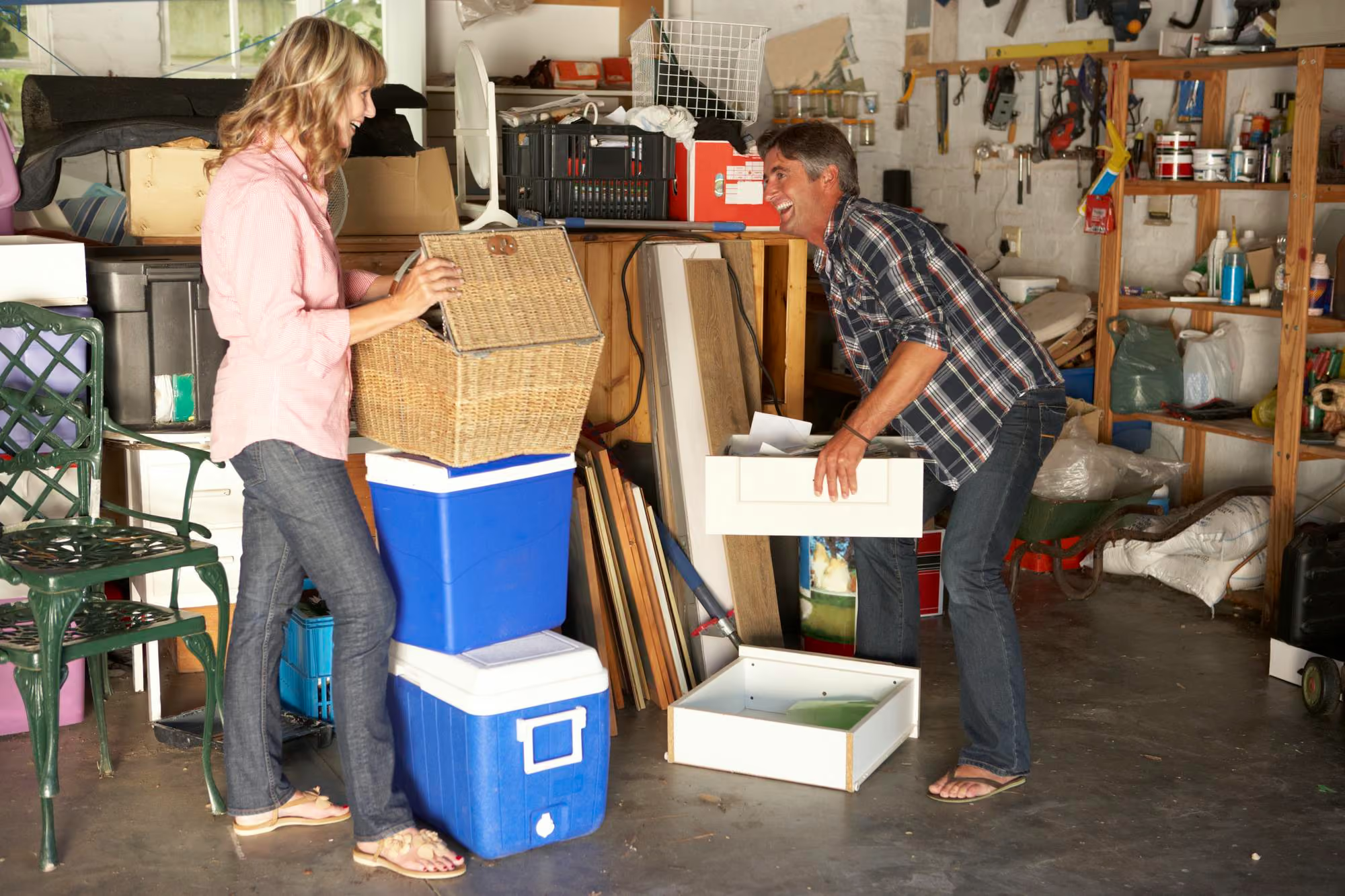
You know the feeling. The house is starting to feel too full, the cupboards are staging a quiet protest, and every time you try to sort through things, you freeze.
It might be your mum’s old crockery. The box of school drawings you cannot bring yourself to recycle. The dress from a special occasion years ago. The guitar you absolutely will pick up again one day.
Standard decluttering advice loves to tell you, “if it does not spark joy, get rid of it.” Helpful in theory. Less helpful when the problem is that plenty of things do still spark joy. They just do not have a proper home right now.
So this guide takes a different approach. You do not have to choose between a tidy home and the things that matter to you.
Learning how to declutter your home is not about becoming ruthless overnight. It is about making thoughtful decisions, creating breathing room, and finding a sensible place for the things you still want to keep.
Why decluttering feels so hard
Decluttering is often described as a practical job, but for many people it is an emotional one first. That is why the “just throw it away” approach can feel so unhelpful. If it were that simple, you would probably have done it already.
We attach meaning to objects. A holiday souvenir is not just a holiday souvenir. It is the trip, the person you were with, the place you loved, the version of your life it reminds you of. A child’s old toy is not just a toy. It is bedtime stories, tiny hands, and a stage of life that has moved on faster than expected. A box of inherited items is not just “stuff”. It can feel like a physical connection to someone you miss.
Objects can represent memories, achievements, relationships and hopes for the future. Sometimes we keep things because they remind us of who we used to be. Sometimes we keep them because they remind us who we still want to become. That is why decluttering can feel strangely heavy. You are not only sorting cupboards. You are sorting identity, memories and decisions you might not feel ready to make.
Clutter can also create a difficult loop. A disorganised home can feel stressful and overwhelming, but feeling overwhelmed makes it harder to start clearing it. The mess creates stress, the stress drains motivation, and the motivation gap lets the clutter grow. Delightful little cycle, that one.
The point is this: finding decluttering difficult does not mean you are lazy, messy or too sentimental. It means you are human. The trick is to stop treating every item as either “keep forever” or “throw away immediately”. There is a very useful middle ground.
How to declutter your home without rushing the process
The best way to declutter your home is not always the fastest way. It is the way you can actually stick with. If you try to tackle everything in one weekend, you are much more likely to feel overwhelmed, hit a difficult decision and abandon the whole thing halfway through, probably surrounded by bags, boxes and regret.
A slower, more structured approach is usually far more helpful. It gives you time to make decisions properly, especially when the items involved have emotional value. You are not trying to erase parts of your life. You are trying to make your home work better for the life you are living now.
Sort by category, not by room
Most people begin decluttering by choosing a room. They start with the bedroom, the spare room, the loft or the cupboard of doom. Then, within minutes, they find something emotionally charged and the whole job grinds to a halt.
Sorting by category is often more helpful than sorting by room because it gives you a clearer view of what you actually own. Instead of tackling “the spare room”, try tackling one category at a time:
- Clothes
- Books
- Paperwork
- Hobby items
- Children’s keepsakes
- Seasonal decorations
- Kitchen extras
- Sports equipment
- Sentimental items
This approach works because clutter is rarely contained neatly in one room. Books might be in the lounge, bedroom, loft and hallway. Paperwork might be in five drawers, three bags and one mysterious pile on the kitchen counter. When you gather similar items together, you can see the true scale of the category.
It also makes decisions easier. Looking at one coat in isolation may make you think, “I should keep this just in case.” Looking at seventeen coats together gives you a different perspective. No judgement. We have all owned more “just in case” items than any reasonable person needs.
Start with easier categories before moving on to emotional ones. Clothes you do not wear, old cables, duplicate kitchen items and out-of-date paperwork are usually easier to deal with than family photos or inherited furniture. Build momentum first. Leave the emotionally loaded boxes until you have warmed up.
Create four simple piles
Decluttering works best when you stop trying to decide everything in one go. Instead of asking, “Should I keep this forever or get rid of it today?” give yourself four options.
Keep
This pile is for the items you use, love or definitely want in your day-to-day home. These things should have a clear place to live. If something is staying in your home, it needs a home of its own. Otherwise it will quietly become clutter again.
Donate, sell or recycle
This pile is for items you no longer need, want or use. If something is in good condition but no longer useful to you, it may be perfect for someone else. Selling can work well for higher-value pieces, while donating can make the process faster and less faffy.
Store
This is the important middle ground. The store pile is for things you want to keep but do not need taking up daily living space. Seasonal items, keepsakes, inherited furniture, hobby gear, extra household items and sentimental belongings can all sit here.
Storage for decluttering is not about avoiding decisions. It is about making better ones. It allows you to reclaim space at home without forcing yourself to part with things before you are ready.
Decide later
This pile should be small, but it is useful. Some items genuinely need a pause. You might be tired, emotional or unsure. Rather than making a snap decision, place those items in a temporary holding category and revisit them later.
The key is not to let “decide later” become the new name for the entire spare room. Give yourself a clear review date. Future-you deserves a deadline.
Storage for decluttering when you want to keep meaningful items
One of the most useful ideas in decluttering is this: keeping something does not mean it has to live in your home full time.
Your home should work for the life you are living now. That does not mean you have to throw away the items linked to previous chapters, future plans or special memories. It simply means they do not all need a front-row seat in your hallway, bedroom or kitchen.
This is where secure self storage can be genuinely helpful. It gives you a practical place for the things that matter, without asking your home to carry everything at once. LOOK’s personal storage options are designed for exactly this kind of real-life overflow, whether you are clearing space, moving things around, or finally tackling the cupboards that have been quietly judging you.
Use the “keep, but not here” mindset
The “keep, but not here” mindset gives you permission to hold onto meaningful items without letting them take over your everyday space.
This can be especially helpful for:
- Family keepsakes
- Children’s drawings and schoolwork
- Inherited furniture
- Seasonal decorations
- Hobby equipment
- Books and paperwork
- Special occasion clothing
- Items for a future home
These belongings may still matter. They just might not need to live in your most useful cupboards, drawers or spare room.
Try the one-box rule
For sentimental items, choose one strong box per person, child, event or life stage. Everything in that box is kept, no questions asked. The only rule is that when the box is full, it is full.
This gives emotional items a boundary without dismissing their importance. You are not throwing away precious memories. You are giving them a proper place.
Use the pause rule
For anything you are genuinely unsure about, place it in storage for three months rather than binning it straight away. If you miss it, use it or think about it often, that tells you something. If you completely forget it exists, that tells you something too.
This is especially useful for items with emotional or financial value. Secure storage lets you keep them safely while removing them from your everyday space. No rash decisions. No regret. No dramatic farewell ceremony required.
Follow the seasonal rule
If something is only used for part of the year, it probably does not need to live in your most convenient cupboard all year round. Christmas decorations, camping gear, summer garden items, winter bedding, sports equipment and holiday items are classic examples.
Keeping seasonal belongings in storage can instantly make your home feel easier to manage.
Decluttering storage solutions that make your home work better
Decluttering storage solutions are not just about moving things out of sight. Used properly, they help you create a home that is easier to live in day to day.
Once you have sorted, donated and stored, take a moment to decide what each cleared area is for. A cupboard should have a job. A drawer should have a purpose. A spare room should not automatically become the place where everything goes to be forgotten.
Try these simple habits:
- Give every remaining item a clear home
- Keep everyday items easy to reach
- Store occasional-use items higher up or further back
- Use labels so boxes do not become mystery cubes
- Do a ten-minute reset once a week
- Avoid putting “temporary” piles down unless they have a deadline
The goal is not perfection. It is a home that feels lighter, calmer and easier to live in. Even a partial declutter can make a noticeable difference. Clearer surfaces, easier cupboards and fewer visual distractions can make the whole place feel less busy.
And once you have created that space, protect it. Otherwise clutter has a sneaky way of creeping back in wearing a fake moustache.
Where self storage fits in
Self storage is sometimes misunderstood as a place people put things they cannot face dealing with. But used properly, it is much more useful than that.
It is a pressure valve.
It gives you space to think, sort and breathe without forcing every decision to happen at once. It allows you to keep the things that matter while freeing your home from items that do not need to be there every day.
That might include:
- Children’s keepsakes
- Inherited furniture
- Seasonal decorations
- Sports and hobby equipment
- Spare furniture
- Books and paperwork
- University belongings
- Items for a future home
- Clothes or equipment you only use occasionally
The key difference is intention. You are not shoving clutter into a unit and forgetting about it. You are choosing what belongs in your home now, what can be passed on, and what is worth keeping safely elsewhere.
That is why storage for decluttering can be such a practical option. It removes the either-or dilemma. You can have a tidy home and keep meaningful belongings. Very grown-up. Very sensible. Slightly less dramatic than crying over a box of old birthday cards in the loft.
How to choose the right storage space
If you are considering storage, the first question is usually size. How much space do you actually need? The good news is that most people need less than they think, especially if items are packed well.
Start with a list of what you want to store. Separate it into boxes, furniture, seasonal items and awkward-shaped belongings like bikes, lamps or sports gear. Then think about whether you will need regular access. If you only need to store items long term, you can pack more tightly. If you will want to pop in and grab things now and then, leave yourself a small walkway.
LOOK’s storage size guide is a useful place to start, especially if you are trying to picture the difference between a small unit, a larger internal space or a container. The LOOK team can also help you choose sensibly, so you do not pay for space you do not need.
For most decluttering projects, people are storing a mix of boxes, seasonal items and a few bulky pieces. That means the right unit often depends less on the number of items and more on how stackable they are. A neatly packed set of boxes behaves very differently from an armchair, a bike and three lamps with opinions.
Decluttering services near me, or storage instead?
If you have searched for “decluttering services near me”, you may already be wondering whether you need professional help or simply more space. Both can be useful, but they solve slightly different problems.
A professional decluttering service can help you sort, organise and make decisions. This may be helpful if you feel completely stuck, are dealing with a large home clear-out, or need support managing the emotional side of the process.
Storage helps when you know you want space back, but you are not ready to part with everything. It is especially useful if your clutter is made up of meaningful, seasonal or occasional-use items rather than things you genuinely no longer want.
In many cases, the answer is not either-or. You might declutter first, then use storage for the items you want to keep but do not need at home. Or you might move items into storage first to create the space and clarity needed to sort properly. No rulebook. No clipboard-wielding clutter police.
LOOK can help you find a secure, flexible space for the things that matter, without asking you to squeeze them into cupboards, garages or under beds forever. You can use the storage size guide to get an idea of what you might need, explore personal storage, or get a quote to find out what it would actually cost.
A gentle way to start
Decluttering does not need to begin with a skip, a spreadsheet and a dramatic life overhaul. Start with one category. Choose something manageable, like shoes, books, kitchen duplicates or seasonal decorations. Make your four piles: keep, donate, store and decide later. Give yourself a time limit and stop before you are exhausted.
Then repeat. Slowly, steadily, and without turning your home into a weekend battleground.
The aim is not to get rid of everything. It is to create a home that feels calmer, clearer and easier to live in, while still making space for the belongings that mean something to you.
If you reach the point where you know what you want to keep, but your home simply cannot hold it all comfortably, storage may be the missing piece. No pressure. Just a practical next step if your home needs breathing room and your belongings still deserve a place.

Ready to start storing?
Request a quote and get your stuff stored safely ahead of your travelling adventure!